
Architecture
-
Against the Retroactive Manifesto: Delirium as Alibi
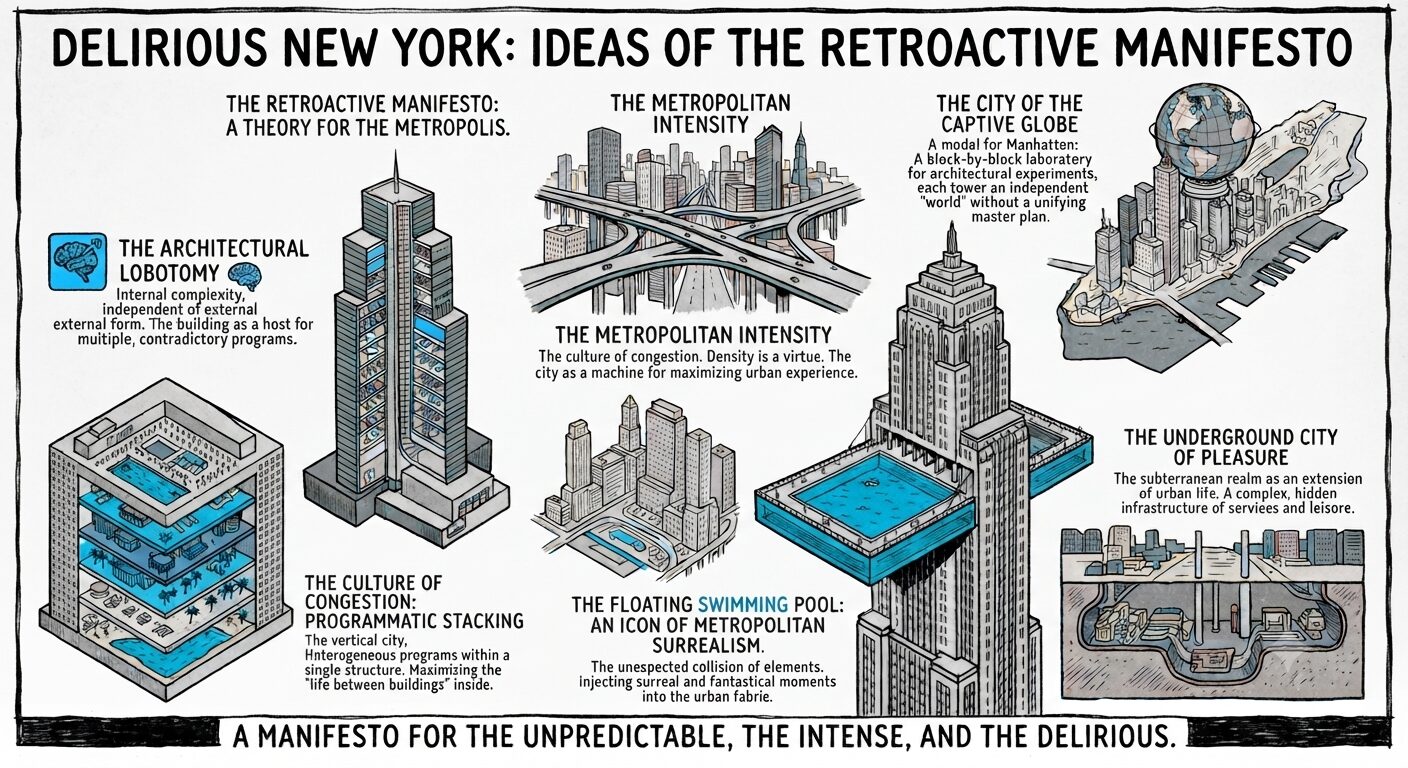
Rem Koolhaas’s Delirious New York remains one of the most influential architectural texts of the twentieth century because it rejects conventional urban planning in favor of celebrating Manhattan’s apparent chaos. Through the idea of the “retroactive manifesto,” Koolhaas argues that the city’s congestion, contradictions, and programmatic instability were not failures but the very forces that… Continue reading
-
Accumulation by Dispossession in the Vertical City: A Harveyan Reading of New York
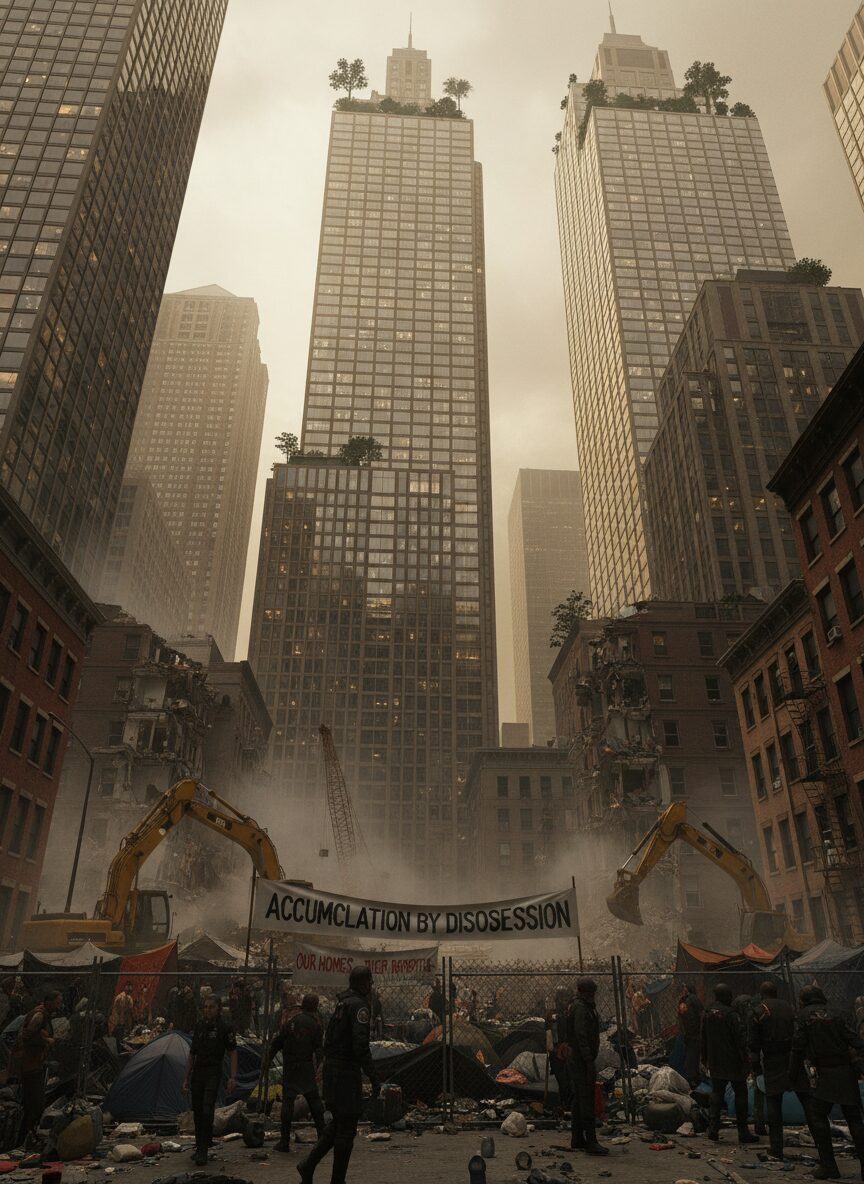
In The New Imperialism (2003) and Rebel Cities (2012), David Harvey reframes urbanization as central—not peripheral—to the dynamics of contemporary capitalism. Extending Marx’s theory of accumulation, Harvey argues that cities function as “spatial fixes” for surplus capital. When profitability falters in primary circuits of production, capital turns toward the built environment: infrastructure, real estate, housing, and large-scale urban redevelopment.… Continue reading