
Panna Meena ka Kund is a historic sixteenth-century stepwell located near Amer Fort in Jaipur, Rajasthan. As an exemplary structure of early modern Rajput water architecture, it demonstrates the technological ingenuity and socio-cultural centrality of water management systems in semi-arid northwestern India.
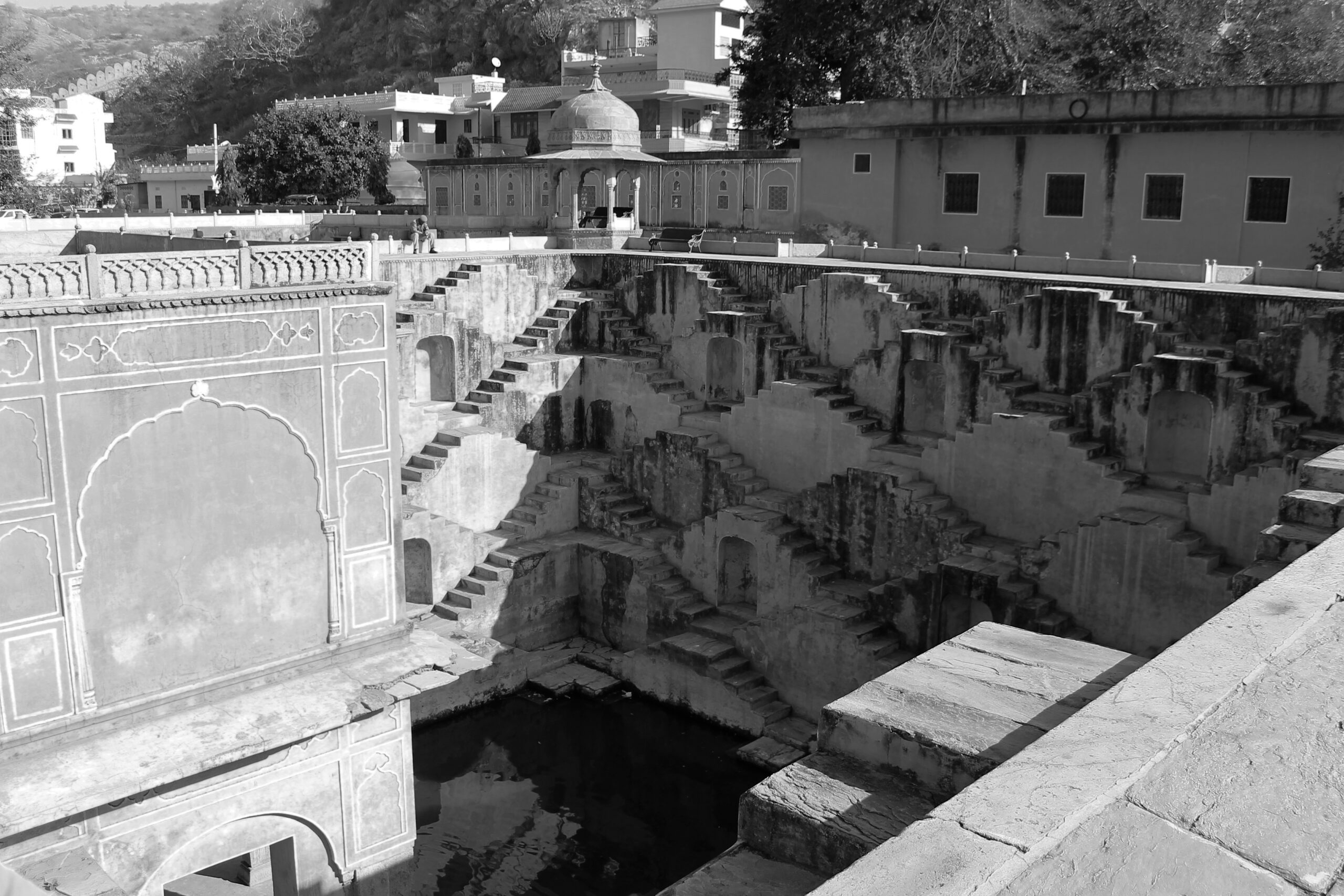
Architecturally, the kund is an eight-story, square-plan stepwell distinguished by its strikingly symmetrical, crisscrossing staircases that descend along all four sides toward a central water pool. The zigzagging flights of steps form intricate geometric patterns, enabling access to water at varying depths in response to seasonal fluctuations. This design reflects a sophisticated understanding of hydrology and structural balance, ensuring both durability and functional adaptability. Octagonal pavilions at the corners and finely executed stone detailing further enhance the site’s aesthetic and ceremonial dimensions.
Originally conceived as a rainwater harvesting and storage system, Panna Meena ka Kund served as a vital source of water for the surrounding community, particularly during periods of drought. In the climatic context of Rajasthan, where water scarcity has historically shaped settlement patterns and architectural forms, such stepwells were indispensable infrastructures of survival and sustainability.
Beyond its utilitarian function, the kund operated as a social and cultural hub. Women gathered here daily to collect water, exchange news, and participate in communal life, while the site also hosted local religious observances and rituals. Thus, it functioned not merely as a hydraulic installation but as a locus of social cohesion and shared identity.
Today, Panna Meena ka Kund stands as a testament to ancient Indian engineering and environmental adaptation. Often overshadowed by the grandeur of nearby Amer Fort, it nevertheless remains a significant cultural landmark and a popular destination for photographers, drawn by its rhythmic symmetry, dramatic perspectives, and evocative interplay of light and shadow. As both an architectural marvel and a repository of lived history, the stepwell offers a compelling glimpse into the environmental intelligence and communal life of early modern Rajasthan.
Panna Meena ka Kund is a historic sixteenth-century stepwell located near Amer Fort in Jaipur, Rajasthan. As an exemplary structure of early modern Rajput water architecture, it demonstrates the technological ingenuity and socio-cultural centrality of water management systems in semi-arid northwestern India.
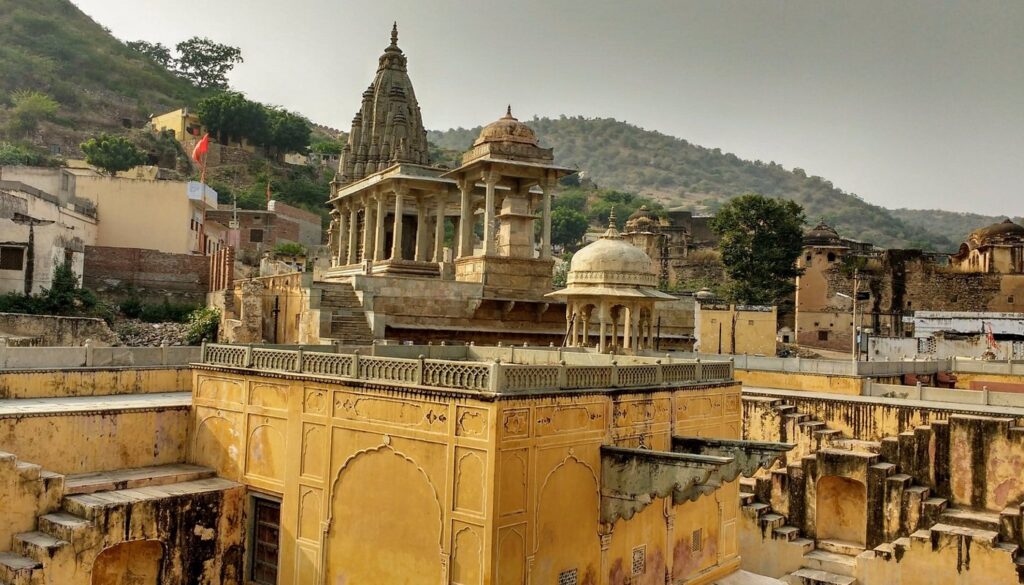
Architecturally, the kund is an eight-story, square-plan stepwell distinguished by its strikingly symmetrical, crisscrossing staircases that descend along all four sides toward a central water pool. The zigzagging flights of steps form intricate geometric patterns, enabling access to water at varying depths in response to seasonal fluctuations. This design reflects a sophisticated understanding of hydrology and structural balance, ensuring both durability and functional adaptability. Octagonal pavilions at the corners and finely executed stone detailing further enhance the site’s aesthetic and ceremonial dimensions.
Originally conceived as a rainwater harvesting and storage system, Panna Meena ka Kund served as a vital source of water for the surrounding community, particularly during periods of drought. In the climatic context of Rajasthan, where water scarcity has historically shaped settlement patterns and architectural forms, such stepwells were indispensable infrastructures of survival and sustainability.
Beyond its utilitarian function, the kund operated as a social and cultural hub. Women gathered here daily to collect water, exchange news, and participate in communal life, while the site also hosted local religious observances and rituals. Thus, it functioned not merely as a hydraulic installation but as a locus of social cohesion and shared identity.
Today, Panna Meena ka Kund stands as a testament to ancient Indian engineering and environmental adaptation. Often overshadowed by the grandeur of nearby Amer Fort, it nevertheless remains a significant cultural landmark and a popular destination for photographers, drawn by its rhythmic symmetry, dramatic perspectives, and evocative interplay of light and shadow. As both an architectural marvel and a repository of lived history, the stepwell offers a compelling glimpse into the environmental intelligence and communal life of early modern Rajasthan.

Leave a Reply